
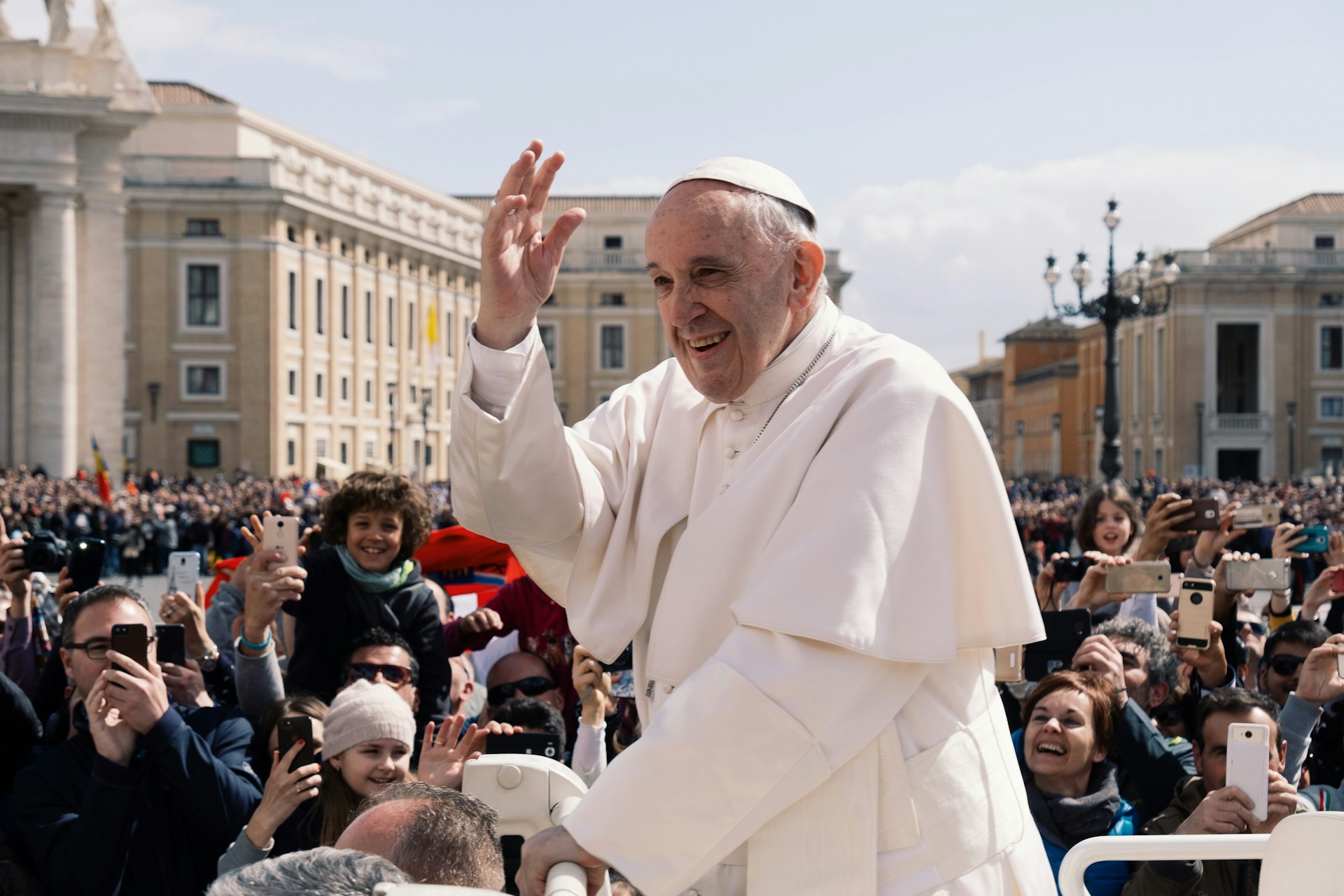
Easter Monday on 21st April, 2025, began as usual in Vatican City, when at 9.45 am Cardinal Kevin Farrell, the Camerlengo or the Chief Administrator of the Holy See during a papal vacancy, announced on Vatican Media that the Pope Francis aged 88 had ‘returned to the house of the Father’ at 7.35 am after he ‘suffered a stroke and irreversible cardiovascular arrest’. The news of his death in his room at Domus Sanctae Marthae (House of St. Martha), a guesthouse for visiting clergy in Vatican City, was met with widespread mourning as tributes poured in from world leaders, religious leaders of different faiths and people from across the globe, which was a testament of his reputation as a global spiritual leader.
A People’s Pope
Pope Francis died as he lived – with the people. Due to his advanced age and having suffered double pneumonia, he was admitted on 14th February to the Gemelli Hospital in Rome in a serious condition. But he partially recovered and was advised two months rest after being discharged on 23rd March. Less than a month after he was discharged, in spite of his frail health condition, he made several public appearances during the Holy Week.
Pope Francis opened Holy Week celebrations on April 13 with an in-person appearance in the St. Peter’s Square unaided by supplemental oxygen and wished more than 20,000 onlookers a “Happy Palm Sunday, Happy Holy Week.” He spent Maundy Thursday visiting Rome’s Regina Coeli prison, where he met with nearly 70 inmates, but was unable to wash the feet of 12 inmates as he used to do before. The day before his death, on Easter Sunday, he came to the balcony of St. Peter’s Basilica to give his traditional Easter Blessing and deliver his ‘Urbi et Orbi’ (“to the city and to the world”) message and blessing before going around the piazza in his popemobile. His final words were “Thank you for bringing me back to the Square” addressed to his personal healthcare assistant, as he felt contented at being in the midst of the faithful people on Easter Sunday as in an interview in the beginning of his papacy he admitted, “I need to live my life with others”. During his pastoral ministry as Archbishop of Buenos Aires and as the Pope, he lived with the people and so in spite of his frail health and against doctor’s advice, he preferred to die with his people.
Pope Francis will be remembered for a number of firsts: the first Pope from the Americas, South America, and Argentina, the first from the global south or the Southern Hemisphere and the first member of the Society of Jesus to be the successor of St. Peter. He was also the first Pope to take the name of Francis, honouring St. Francis of Assisi, who loved God, loved the poor, pursued peace, wrote poems in praise of the sun, moon and the stars out of his love for nature, and heard a voice telling him, “Francis, go and rebuild my Church which, as you see, is in ruins.”
Pope with a Simple Lifestyle
Pope Francis is widely recognized for his humility and simplicity, which he exemplified through his lifestyle and teachings. On his election, instead of accepting his cardinals’ congratulations while seated on the papal throne, he received them standing. During his first appearance as pontiff on the balcony of St. Peter’s Basilica, he wore a white cassock, instead of the traditional papal garb of red, ermine-trimmed mozzetta, the little red and fur-lined cape and the red shoes used by previous popes. He also wore the same iron pectoral cross that he had worn as an archbishop of Buenos Aires, rather than the gold one worn by his predecessors. He began with a simple greeting “Buonasera” (“Good evening”, in Italian) and also reversed the roles by asking the cheering multitude of faithful to pray for him before delivering the papal blessing to them. On the night of his election, he took a bus back to his guest house with the cardinals rather than being driven in the papal car, collected his belongings and insisted on paying the bill. Unlike previous Popes, who resided in the Apostolic Palace, Pope Francis chose to live in a modest room in the Vatican guesthouse. Here, he engaged with people, including clergy, visitors, and Vatican staff, emphasizing his role as a servant of the Church. This choice reflected his desire to be closer to the people and to embody the spirit of service rather than opulence. His down-to-earth nature and accessibility, including venturing outside the Vatican to visit a record shop, further reinforced his commitment to simplicity. He shunned travelling in limousines and rather used a Ford Focus for his daily transportation within Vatican City or in an ordinary Fiat, Kia, Hyundai or Renault cars during his visits around the globe. His gestures, such as auctioning off a gifted expensive Lamborghini Huracán car painted in Vatican colours and using the proceeds amounting to $950,000 to support the underprivileged, demonstrated his focus on helping those in need and his rejection of material possessions. He also abolished the bonuses paid to Cardinals and Vatican employees amounting to several million euros, opting instead to donate the money to charity.
Even in death, Pope Francis sought to teach simplicity by stripping down the funeral rites to offer one final lesson on humility to the Church he loved so deeply. In keeping with the simplicity that defined his life and ministry, Pope Francis chose not to be buried within the grand halls of the Vatican, but at the Santa Maria Maggiore, a smaller basilica he often visited in quiet prayer, located beyond the Vatican walls. At his request, his mortal remains lies in a simple tomb marked only by a plain gravestone bearing a single word: Franciscus, the Latin name he carried as a humble servant of God.
Compassion for the Poor, Migrants and Refugees
Pope Francis was born as Jorge Mario Bergoglio in Buenos Aires on 17 December 1936 to an Italian immigrant’s family who left Italy in 1929 to escape the fascist rule of Benito Mussolini. The family had to face several hardships and young Jorge worked as a bouncer and janitor to support his education. As Archbishop of Buenos Aires, his empathy with those at the bottom of the economic ladder was evident in his simple lifestyle, which included travelling with other commuters in the metro. This experience shaped his outlook of life and his profound commitment to the poor, migrants, and refugees. He has consistently spoken out against the injustices they face, advocating for the rights and well-being of migrants and refugees. He has called for a compassionate response to migration outlining a four-step framework to welcome, protect, promote, and integrate migrants in destination countries. He has strongly criticized those who turn away migrants and refugees, stating that it’s hypocritical to claim to be Christian and then deny help to those in need.
Pope Francis matched his words with action. In his first apostolic travel in 2013, Pope Francis visited the tiny Italian island of Lampedusa, where he prayed for illegal migrants who drowned trying to reach Europe. In 2016, when Europe was facing a huge migration crisis and when xenophobia was escalating, he flew to the Greek island of Lesbos and returned to Rome with three families of asylum-seeking Syrian Muslims. In 2021, he personally intervened to assist asylum seekers and refugees, including arranging safe passage for them, such as the group of 50 asylum seekers relocated to Italy from Cyprus.
During Donald Trump’s first presidency from 2017 to 2021, Pope Francis made his opposition to Trump’s planned wall between Mexico and the United States clear, and in 2019 said he was willing to meet the President to urge him not to separate children from their families through his migration and deportation policies. Then, within a month of Trump’s inauguration for his second term in January 2025, he responded to the mass deportation of illegal immigrants by writing a letter to the US bishops warning that “the act of deporting people who in many cases have left their own land for reasons of extreme poverty, insecurity, exploitation, persecution or serious deterioration of the environment, damages the dignity of many men and women, and of entire families, and places them in a state of particular vulnerability and defencelessness”.
In the Vatican, he established Migrants and Refugees section within the Dicastery for Integral Human Development, ensuring that the Church’s efforts to support migrants are prioritized and coordinated. Therefore, Pope Francis’s actions and words have positioned him as a powerful voice for the vulnerable, especially migrants and refugees, emphasizing the importance of human dignity and solidarity.
Pope Francis was known to make symbolic actions that expressed solidarity with the suffering such as greeting people on wheelchairs or kissing and embracing a man severely disfigured because of a genetic disorder during his general audience. He also made surprise phone calls to widows, rape victims, priests from Gaza to bring healing and comfort to them in their suffering and hardships.
In his Apostolic letter, Misericordia et Misera, issued on 20 November 2016, Pope Francis established the World Day of the Poor, when he has lunch with the poor and delivers a message on the occasion. He also established a dedicated shelter for the homeless with free meals, public bathrooms with showers, laundry services and a barber shop in the Vatican.
Pope who Cared for Creation
As the world was grappling with Climate Change, Pope Francis published the encyclical Laudato Si (Praise be to you) in May 2015, pointing out to the urgent environmental issues and the need for ‘care of our common home’, the Earth. It emphasized the interconnectedness of human suffering and the ecological crisis that affects the poorest and most vulnerable people the most and called for an “integral ecology” that links environmental protection with human dignity, poverty alleviation, and economic reform. This document influenced the Paris Climate Agreement at the end of the year, where 195 countries agreed to take concrete actions to limit the increase in the global average temperature to 1.5ᵒC above pre-industrial levels by the end of the century. Unhappy with the inaction to the rapid increase in global temperatures, Pope Francis released the apostolic exhortation Laudato Deum (Praise God) in October 2023, to warn the global community about the severe consequences of the climate crisis and invited individuals, communities and nations to take responsibility for our planet Earth and work towards a sustainable future
Pope for Peace and Human Fraternity
Pope Francis played a pivotal role in promoting peace and human fraternity. In one of the most humbling gestures, on 11th April 2019, Pope Francis went down on his knees and kissed the feet of the warring South Sudanese leaders begging them to stop the civil war and live in peace. Later, in February 2023, he embarked on a joint peace-making visit to war-torn South Sudan alongside the Archbishop of Canterbury and the Moderator of the Church of Scotland in an unprecedented ecumenical mission and journey of peace. Pope Francis worked tirelessly to build bridges between nations and was instrumental in helping Cuba and the United States of America restore diplomatic ties in 2014. He was deeply distressed with the Russia-Ukraine war and Israel-Palestine war and repeatedly called for a ceasefire. However, he expressed his solidarity with the suffering Palestinian civilians in Gaza through gestures like inaugurating a crib with baby Jesus swaddled in the Palestinian keffiyeh (scarf) in 2024, regularly calling the parish priest of Holy Family Church in Gaza City and donating his popemobile to be converted into a mobile clinic for the children of Gaza.
On 4th February, 2019, Pope Francis and the Egyptian Grand Imam of Al-Azhar Mosque, Ahmed el-Tayeb, signed the “Document on Human Fraternity for World Peace and Living Together” in Abu Dhabi. The document is a joint declaration emphasizing the importance of dialogue, mutual understanding, and cooperation between different religions to promote peace and respect for human dignity. This document has made such a global impact that in December, 2020, the United Nations General Assembly adopted a resolution designating 4th February as the International Day of Human Fraternity to be commemorated annually and encouraged all member States to actively promote a culture of peace, tolerance, inclusion, understanding and solidarity. He articulated his vision of human fraternity and social friendship for a more just and peaceful world in his encyclical Fratelli Tutti (All Brothers) in 2020, where he highlighted the role of religions in promoting peace and fraternity. Pope Francis continued spreading the message of human fraternity by engaging with leaders of different faiths, including the Grand Imam Nasaruddin Umar of the Istiqlal Mosque, Jakarta, along with whom he gave a joint call for religious harmony in September 2024.
Pope of Mercy and Inclusion
Pope Francis chose his motto: Miserando atque Eligendo, which means ‘by having mercy and by choosing’ to convey that his papacy will be marked by mercy rather than judgment. This was reflected during an in-flight press conference on his way back to Rome from his first papal trip, World Youth Day in Rio de Janeiro in July 2013, when he responded to a question on gay priests in the Vatican by asking: “If a person is gay and seeks the Lord and has goodwill, who am I to judge?” In keeping with his motto, Pope Francis called for an Extraordinary Jubilee of Mercy from December 8, 2015, to November 20, 2016, for the Catholic Church to focus on God’s mercy and forgiveness. It aimed at strengthening the Church’s commitment to showing mercy and compassion, particularly towards those in need.
Later, in 2016, in his apostolic exhortation Amoris Laetitia after the Synod on the Family, he opened the door for the readmission to the sacramental life of the Church in some circumstances for divorced and remarried Catholics. And in December 2023, he approved the publication of Fiducia Supplicans by the Dicastery for the Doctrine of the Faith permitting priests to give blessings to “couples in irregular situations and same-sex couples” outside of a liturgical framework.
Pope Francis conveyed his message of mercy and inclusion through gestures rather than words. On the first Maundy Thursday following his election, Pope Francis washed and kissed the feet of ten male and two female juvenile offenders imprisoned at Rome’s Casal del Marmo detention facility, telling them the ritual of foot washing is a sign that he is at their service. Among them were two Muslim prisoners, one male and one female. He kept this tradition throughout his papacy.
A Reformer Pope
Pope Francis brought in radical reform in the Catholic Church. He appointed eight cardinals from across the globe to advise him on the governance of the Church. He sought to open up governance of the Church, which was predominantly run by male clergy. His bold reforms involved bringing in more lay people, men and women, to participate in synods, first speaking in them, and later having equal standing with cardinals and bishops when it came to voting.
Pope Francis was vocal against clericalism and at the Chrism Mass on the first Maundy Thursday after his election, he reminded more than a thousand priests, bishops and cardinals present that a priest should be a shepherd who is close to his people, with “the smell of the sheep”.
Pope Francis also appointed more women in leadership roles in the Vatican. In 2021, he released an Apostolic Letter Spiritus Domini, formally changing canon law to allow women to serve as lectors and acolytes, earlier reserved only for men. For the first time he appointed women as Prefect of the Dicastery for Institutes of Consecrated Life and Societies of Apostolic Life, Secretary General of the Governorate of Vatican City State, Under-secretary of the Synod of Bishops with voting rights, and even members in the Dicastery for Bishops, granting them a role in selecting new bishops. He also established commissions to study the historical role of female deacons and the possibility of reinstating the role of deacon for women, but the deliberations of these commissions remained inconclusive.
The First Jesuit Pope
It was ironic that 240 years after Pope Clement XIV suppressed the Society of Jesus in 1773, and 199 years after Pope Pius VII restored the Jesuit order in 1814, Cardinal Bergoglio, a member of the same order, was elected the first Jesuit Pope in 2013. A Jesuit revers the Pope as the Vicar of Christ on Earth and makes a fourth vow of ‘obedience to the Pope’ with regard to mission, in addition to the evangelical vows of poverty, chastity and obedience. In 1958, Jorge Bergoglio joined the Society of Jesus, founded by St. Ignatius of Loyola in 1540, and was ordained a priest in 1969. He served as master of novices and professor of theology before being appointed in 1973 as Provincial of the Jesuit Province of Argentina at the age of 36. Being, rooted in Ignatian spirituality and well-versed in Catholic theology and administration, his papacy reflected his theological expertise, administrative acumen and the Jesuit way of proceeding.
In 1975, the 32nd General Congregation of the Society of Jesus, in which he participated, defined a Jesuit as ‘a sinner, yet called to be a companion of Jesus’. Pope Francis shared this same sentiment in an interview soon after his election, when he described himself as “a sinner whom the Lord has looked upon”. In the same Congregation, under the leadership of the charismatic Fr. Pedro Arrupe, the Jesuits redefined its mission as “promotion of faith that does justice”. At the same time, liberation theology developed in the 1970s helped in articulating ‘preferential option for the poor’ as a key principle in Catholic Social Thought. These trends influenced the outlook of Pope Francis towards the poor and the role of the Church in contemporary society. He epitomized the Jesuit motto ‘Ad Maiorem Dei Gloriam’ (All for the Glory of God), a constant pursuit of God’s will through discernment and service. He communicated this spirit of discernment through his efforts to build a Synodal Church, always listening to the promptings of the Holy Spirit in the voices of the People of God. He was relentless in his Ignatian quest to seek and find God in all things, which led him to focus on marginalized communities, environmental stewardship and inter-faith dialogue.
His profound Jesuit commitment to ‘community’ kept him close to Jesuits across the globe. He addressed Jesuits and their collaborators in the Vatican and during his Apostolic visits to different countries, always encouraging them in their mission.
Pope Francis and India
Pope Francis did not visit India during his 12 year papacy. However, he showed great interest in the people of India and met several delegations from India, including the Prime Minister, on various occasions. He appointed three Indian Cardinals. In 2022, for the first time in the 500-year history of the Archdiocese of Goa and Daman, Archbishop Felip Neri Ferrao was appointed Cardinal. In the same consistory, he appointed Archbishop Anthony Poola of Hyderabad as the first Cardinal belonging to Dalit Christian origin. Later in 2024, he appointed Fr. George Jacob Koovakad as Cardinal and made him the first Indian to be Prefect of the Dicastery for Inter-Religious Dialogue.
During the last 12 years, Pope Francis canonised 6 Indians to sainthood. They are St. Kuriakose Elias Chavara and St. Euphrasia Eluvathingal on 23rd November 2014, St. Joseph Vaz on 14th January 2015, St. Teresa of Kolkata on 4th September 2016, St. Mariam Thresia Chiramel Mankidiyan on 13th October 2019 and St. Devasahayam Pillai on 15 May 2022. These saints reflect the maturity of the Christian faith in India as their lives continue to inspire people of all faiths in the Indian sub-continent.
The Legacy of Pope Francis
The legacy Pope Francis leaves behind is a legacy of hope in the midst of hopeless situations engulfing humanity. On the eve of Christmas of 2024, Pope Francis inaugurated the Jubilee Year 2025 with the theme “Pilgrims of Hope”. Earlier last year, he became the first Pope to release his own autobiography titled “Hope”. He has given hope for the Catholic Church to respond to the challenges of the 21st century through a synodal process of communion, participation and mission. He has given hope to ecumenical endeavours for peace and prosperity for all nations. He has given hope to efforts to address the climate crisis by collectively working to care for our common home, the planet Earth, and build a sustainable future. He has given hope to efforts to bring peace in war-torn regions of the world with his message of building a human fraternity of love, mutual respect and peaceful coexistence. He has given hope to women and other sexual minorities by his efforts at inclusion and the adoption of a merciful approach to difficult human situations. He has given hope to the suffering, the poor, migrants and refugees by expressing his solidarity with them and their struggles. He was a global voice of hope, compassion and peace, along with justice and ecological sustainability.
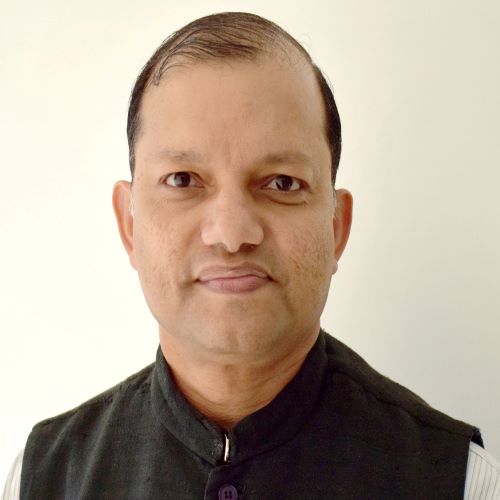
Dr. Denzil Fernandes SJ, is the Head of the Peace and Reconciliation Unit, at Indian Social Institute, Bengalauru. Prior to this he served as HoD, Department of Dalit Studies, and later as Executive Director of Indian Social Institute at New Delhi from 2015-2023. He was also the editor of the journal ‘Social Action’. He has two Master’s degrees – one in Economics and one in Politics. He completed his Ph.D in Social Sciences from Tata Institute of Social Sciences, Mumbai. He has authored books and written articles especially in the areas of Politics, Labour Economics, Development Economics and Migration.